
Swappable LiFePO4 for Lead-Acid Fleet Retrofits
Electric motorcycle and okada fleet operators that run high-cycle daily service on lead-acid packs all face the same requirement: short pack life under commercial use, multi-hour recharge times, manual swap handling and no reliable way to read pack health in the field. This configuration pairs swap-ready LiFePO4 packs with an integrated BMS, rack-level pack identification and swap-station hardware so a rider-operated fleet can move to fast, trackable swapping without redesigning the drivetrain.
Illustrative application scenario, based on the requirements we quote for. It does not represent a named customer or a completed reference project.

E-Mobility & Battery Swapping · rider-operated fleets
What this site limits
- Pack footprint and handle geometry have to fit the existing under-seat or side-mount battery box, without frame modification
- Charge racks on site dictate the terminal layout, so connectors are agreed before tooling starts
- The pack is handled by riders every day, not by technicians: case reinforcement and carry geometry matter as much as capacity
- Pack telemetry has to reach the operator’s own dashboard, so the register map is agreed with their software team
- Retrofit is staged: lead-acid vehicles stay in service while packs are introduced vehicle by vehicle
The challenge
Our solution


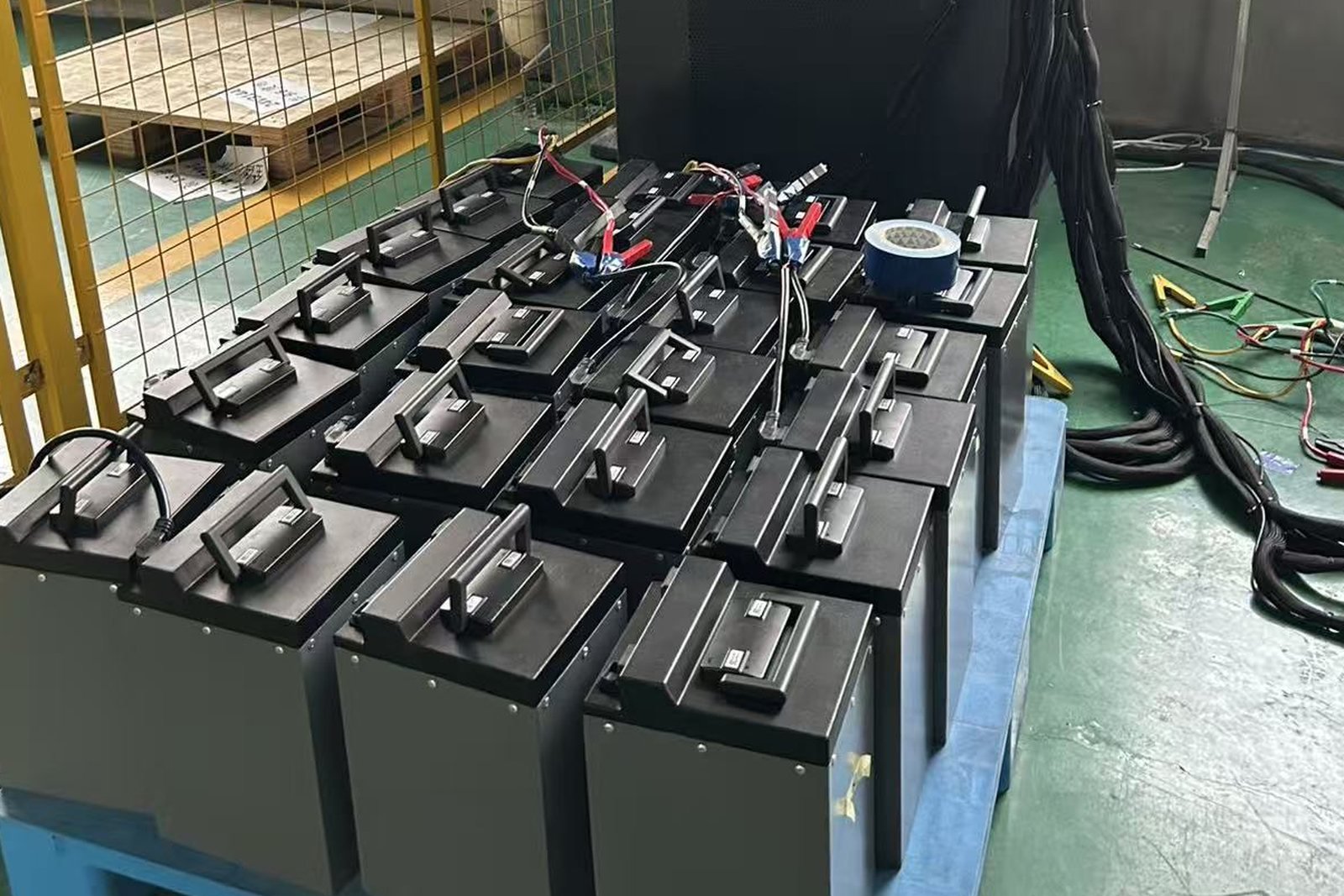
What this configuration supports
Configuration envelope
Moving a rider network onto swappable LiFePO4 is a planning decision as much as a hardware one. Riders need to trust that a fresh pack is always within reach, and fleet operators need to see pack health before it becomes a rider's problem.
— Illustrative scenario narrative, not a customer statement
How the order is executed
The terms below apply to the batteries and hardware in this configuration. Voltage, capacity, quantity and destination are written into the quotation, and the items below are confirmed in writing before production.
| Minimum order | 20 units per model for a production order. Single units are available as paid evaluation samples, credited against your first production order. |
| Lead time | 25 days after the deposit is received for a standard batch. Tooling, custom BMS or project-specific capacity is scheduled separately and confirmed on the quotation. |
| Payment | T/T: 30% deposit with the order, balance against the bill of lading copy. |
| Shipment | Tell us the destination port or door. The quotation states the Incoterm and the freight option we are quoting, so the delivered cost is comparable across suppliers. |
| Packing | Packed to the packing instruction applying to UN3480 or UN3481, terminals protected, lithium battery mark and hazard label applied, pallets strapped and shrink-wrapped. |
| Documents with the goods | Packing list, commercial invoice, MSDS, UN38.3 test summary and report, shipper’s declaration for dangerous goods, and the bill of lading or air waybill. |
| Per unit | Datasheet for your model and the end-of-line test record for that serial number. |
| Warranty | 3–5 years, depending on model, written into the contract. |
| HS classification | Lithium-ion accumulators, heading 8507.60. The national tariff line and duty rate are confirmed against your destination before the order is placed. |
Documents: Packing and shipping document checklist · provided with your quotation · BMS protocol mapping note · provided with your quotation
How to verify before ordering
- Evaluation packs issued for an on-vehicle trial, with the factory inspection record for those serial numbers
- Capacity and internal-resistance grading data from our cell sorting line
- CAN / RS485 register map for your dashboard, so telemetry is proven before the fleet goes live
- UN38.3 test summary report and the transport documents that ship with the units
- Written quotation naming voltage, capacity, enclosure, connector, BMS protocol and warranty period
Models that fit this scenario
Every figure in these tables is published on the matching product page. Voltage, capacity, enclosure and connector can be re-rated for your project.
Battery Swapping Packs
| Application / load | Voltage platform & capacity | Current & thermal design | BMS & communication |
|---|---|---|---|
| Delivery three-wheelers and light cargo carts on battery-exchange networks | 48 V 24 Ah swappable pack · 51.2 V (48 V class), 24 Ah, 1.23 kWh | Maximum continuous charge current 25 A; IP67; -20 °C to +60 °C | Cell-level monitoring with active balancing; CAN / RS485 / UART, Bluetooth optional |
| Electric motorcycles and ride-hailing fleets that swap packs mid-shift | 60 V 40 Ah swap pack · 64 V (60 V class), 40 Ah, 2.56 kWh | Charge current 40 A, full charge in about 2 hours; IP67 aluminium case | Active balancing and current limiting; CAN / RS485 / UART, Bluetooth optional |
| Heavy-duty and long-route fleets that need the largest pack in the line | 72 V 45 Ah heavy-duty pack · 76.8 V (72 V class), 45 Ah, 3.46 kWh | Charge current 45 A, full charge in about 2.5 hours; IP67, shock-absorbing mounts | Active balancing and current limiting; CAN / RS485 / UART, Bluetooth optional |
Have a similar project?
Tell us your duty cycle, vehicle platform and volume and we will come back with a configuration and price.