
Latest posts
-
Sizing home storage for a weak grid: load list first, capacity second
Most home storage systems that disappoint their owners were not badly built. They were sized on a bill rather than on a load. A monthly kilowatt-hour figure tells you the average; it does not tell you how much of that load the battery has to carry after sunset, how long it must carry it when…
-
Parking cooler batteries for trucks: size it before you buy
A truck parked for the night with the engine off is running a small hotel: a sleeper cooler drawing 600–900 W, cab lighting, a phone charger, sometimes a 12 V fridge. On a standard two-battery 24 V lead-acid set, that load comes out of batteries designed to deliver one short burst of cranking current and then be recharged…
-
Ordering LiFePO4 Packs from China: MOQ, Lead Time, Documents
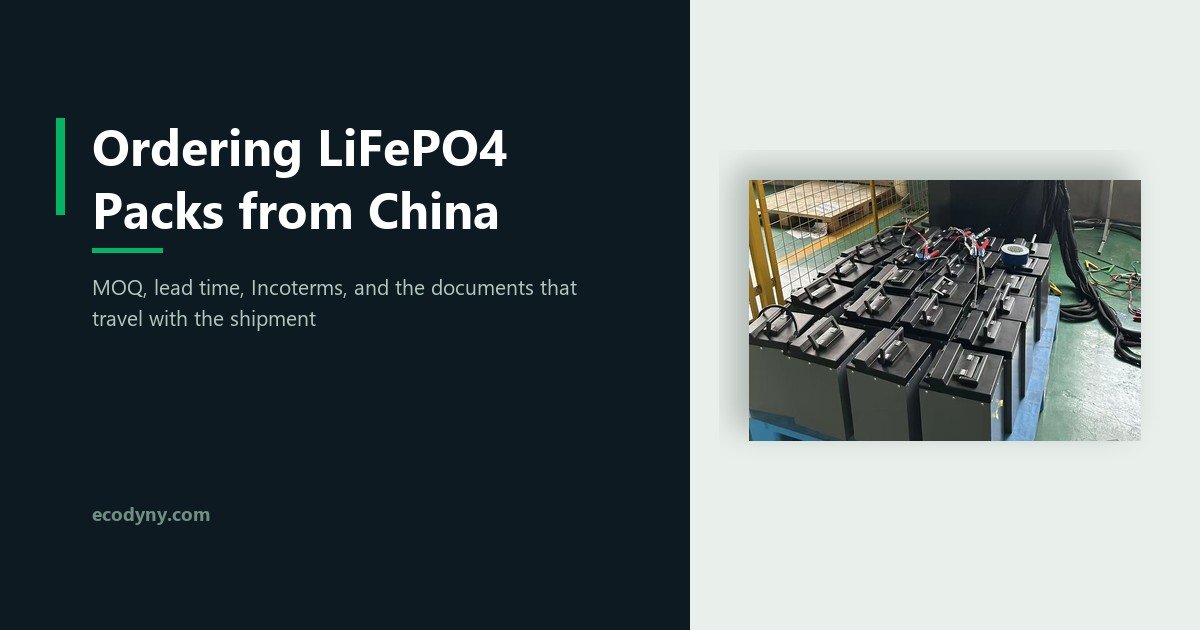
Once a buyer has compared the spec sheets, the next round of questions is almost always the same: what is the minimum order, how long until it ships, what documents come with it, and who pays for what between the factory gate and the destination port. Getting those four answers right in the first reply…
-
How to Read a LiFePO4 Spec Sheet: Six Numbers That Decide the Deal
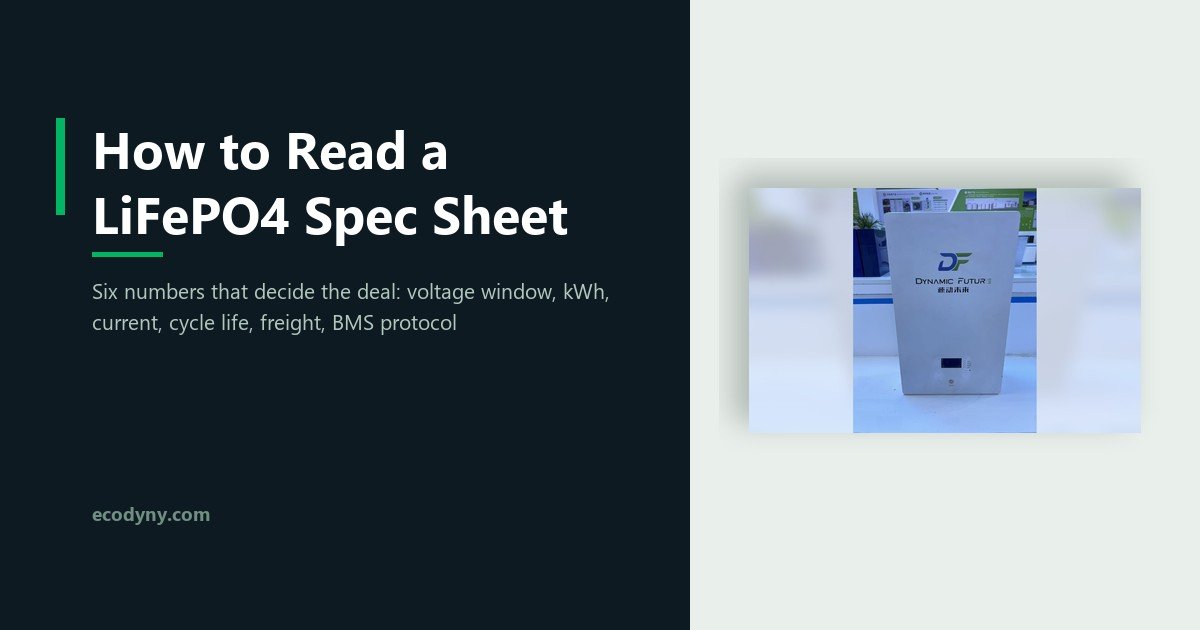
Most B2B battery inquiries start with a headline: 48V, 100Ah, 5 kWh. Then the buyer asks for the spec sheet, and that is where the comparison actually happens — usually in a spreadsheet, against two or three other suppliers. The sheet is not a formality. It is the document that decides whether your pack fits…
-
Importing LiFePO4 Batteries: Documents, HS Codes and Certification
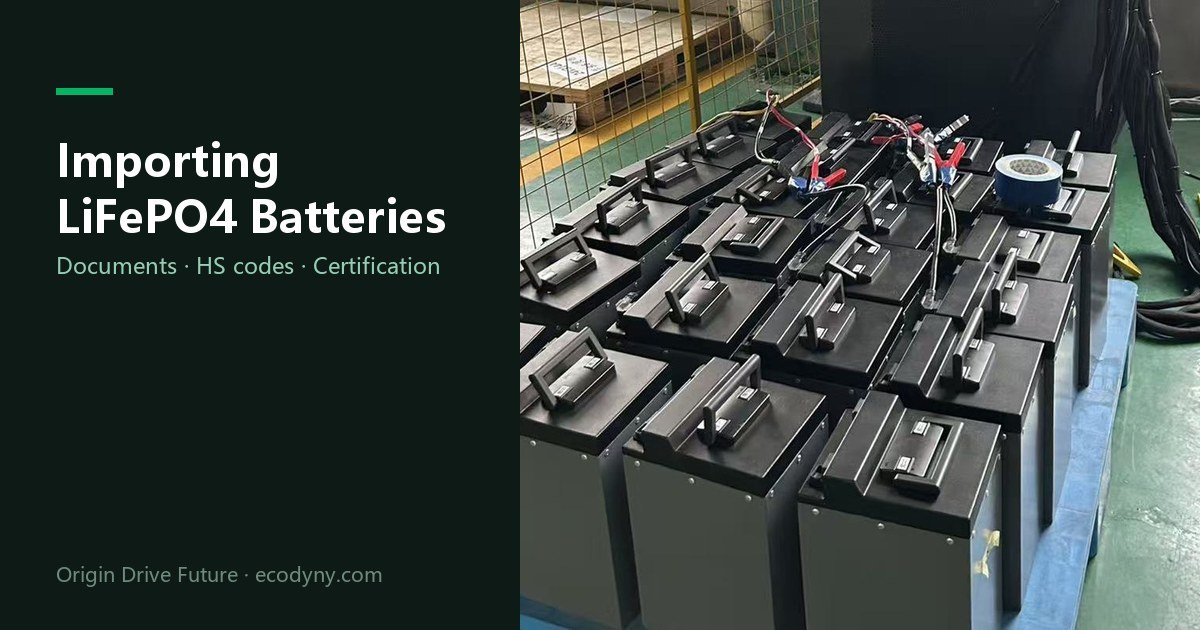
UN38.3, UN numbers, HS 8507.60 and market-access registration by destination – the documentation checklist that gets a battery shipment cleared.
-
LiFePO4 BMS: What to Specify Before You Order
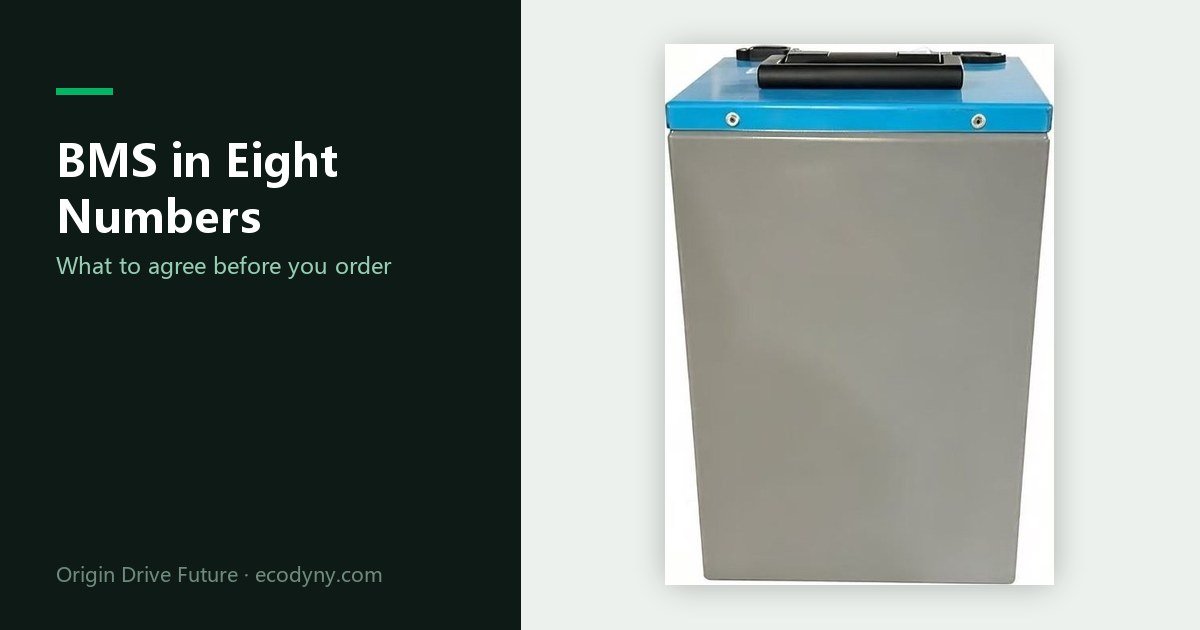
Most LiFePO4 pack failures are specification failures, not cell failures. The eight numbers to settle with a BMS supplier before you place an order.
-
Specifying a Swap Pack for E-Rickshaws and E-Scooters

A swap pack is not a small traction pack. Mass, latch, connector cycle life, IP rating and BMS telemetry decide whether a swap network still works in year three.
-
100Ah LiFePO4 Battery: Choosing 12V, 24V or 48V for Solar Storage
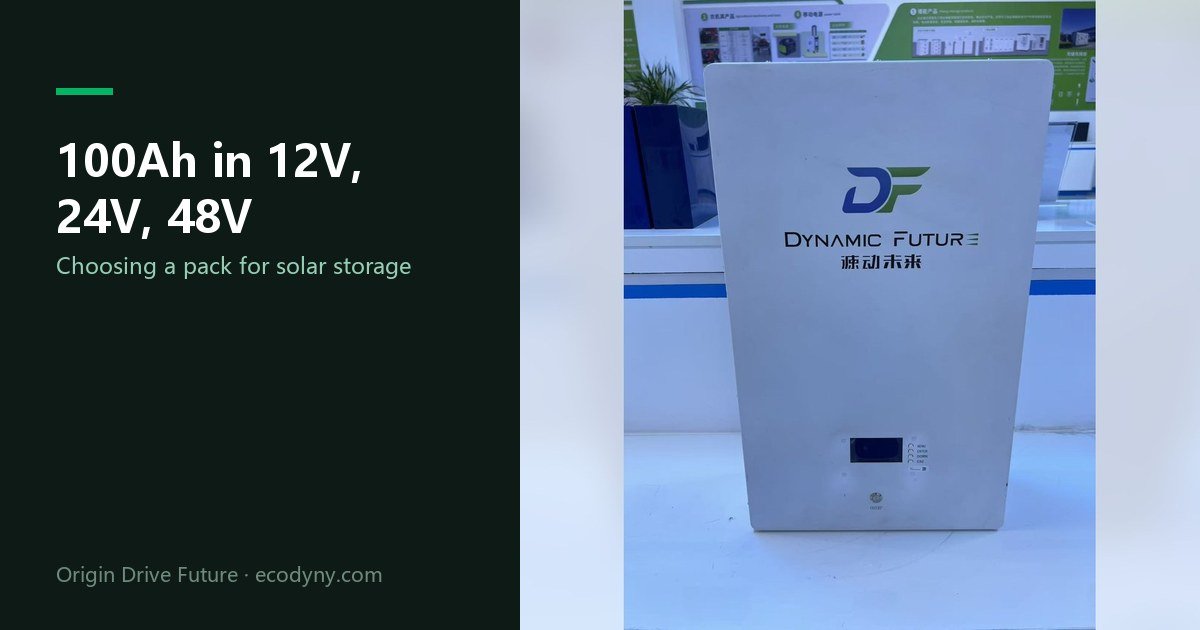
A 100Ah LiFePO4 cell can be built into 12V, 24V or 48V packs. How to pick the voltage from load, cable run and inverter – with the current maths and a worked sizing example.


